Clouds of Limitless and Expanding Joy
In Conversation with Hugo Winder-Lind — Clouds of Limitless and Expanding Joy
March 23, 2026
Words by Lucy Şeniz
Photos by Yann Chashanovski
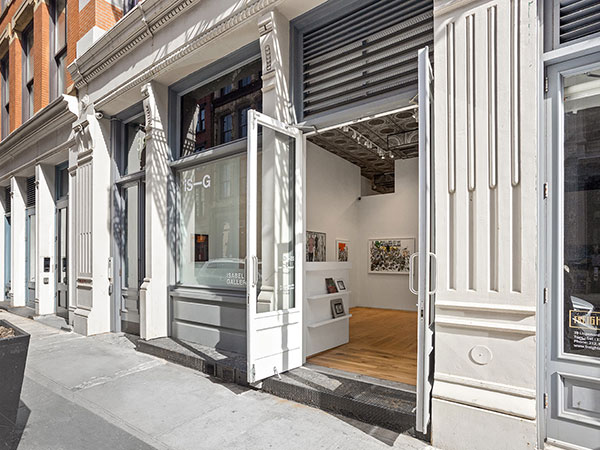
"When I first opened the gallery, I hired someone to help me track down exciting artists who might be a good fit for our program. She found Hugo's work on Instagram and sent it to me. I thought the work was really powerful and there was something special about what he was doing. It felt authentic, so I watched him for about a year before engaging him about a potential collaboration."
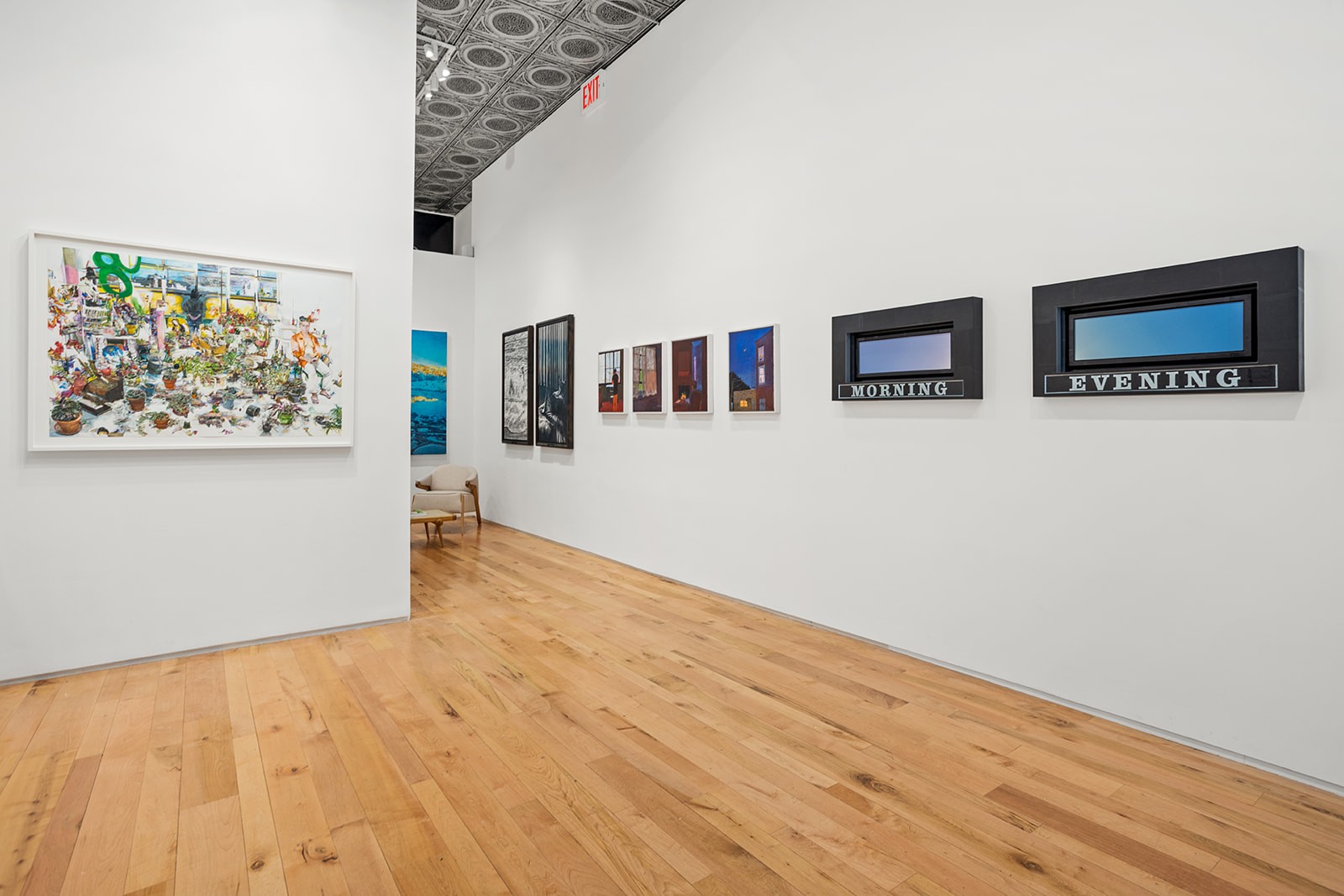
"For the exhibition, I wanted to give Hugo the space to create a body of work that he was really excited about. It ended up becoming a blend of monumental works and small-scale, intimate works. That wasn't really planned or intentional but just evolved naturally. There's always a mixture of excitement and fear around showing very large work, because on the one hand, it can be strong, moving, and powerful in a way that only monumental work can be. On the other hand, showing large works is riskier because the pool of collectors at that scale is smaller. I'm happy we rolled with it though, as the big paintings are just incredible. They envelop you and bring you into this world that Hugo has created. One where animals and nature take center stage."
—Isabel Sullivan, Gallery Owner
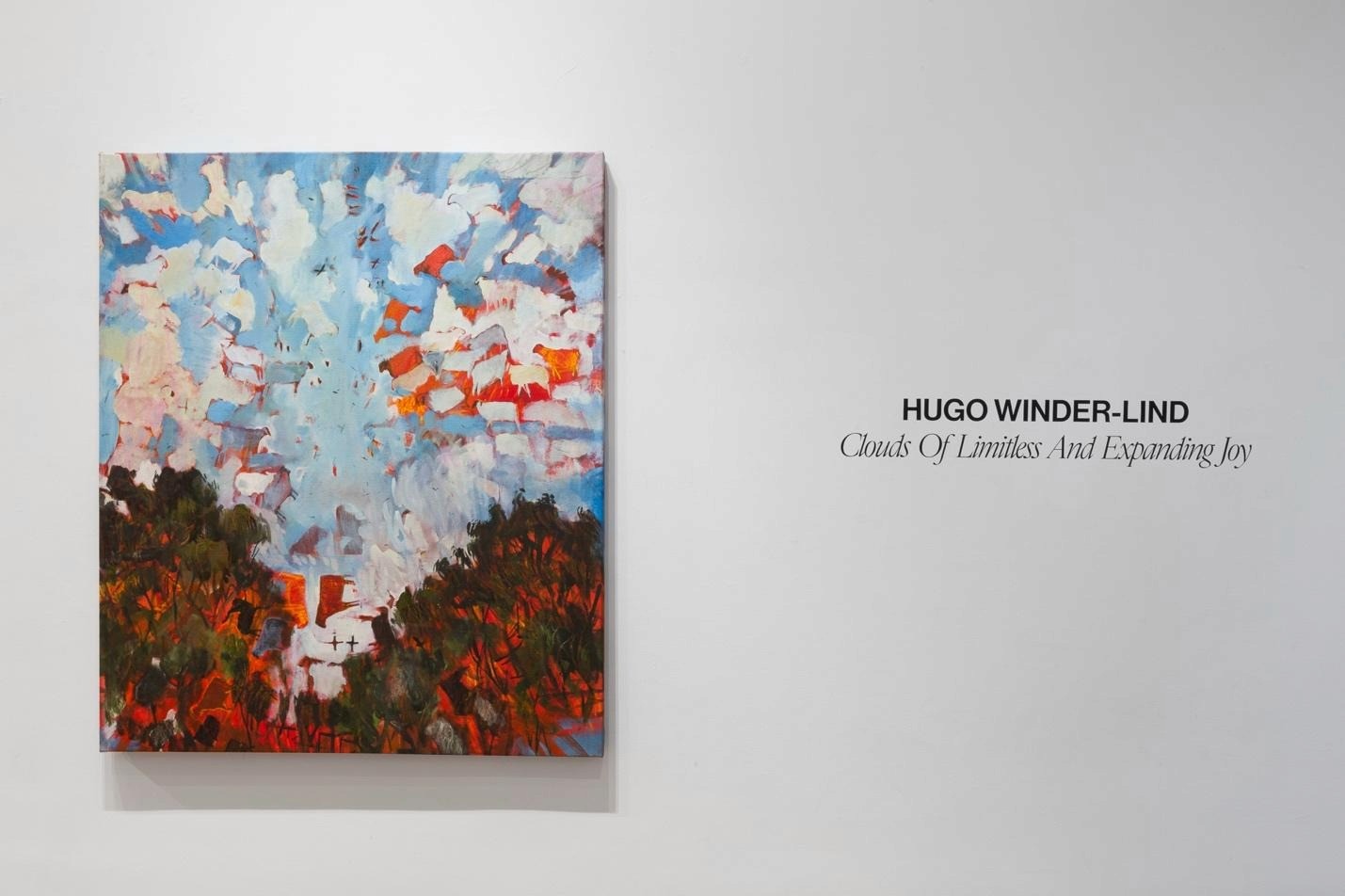
Hey Hugo! It’s great to talk again. Congratulations on the new show exhibited at Isabel Sullivan Gallery in New York: CLOUDS OF LIMITLESS AND EXPANDING JOY. To begin, tell us about the origin of the exhibition’s title…
I saw something recently, which was that the title is like a trigger, the work is the explosion. The title pushes a button and the action is the artworks themselves, they have like a function, right?
The title is a thing that kind of pushes the work into another place. It's come from the studio into this interaction with the physical medium – the title points to this. All the titles of all the paintings, they're almost like a different genre, or of a different medium. You can express yourself in paint, and then you can express yourself in words, but you get seven words maximum per painting to turn the attention to somewhere else.
What does the exhibition mean to you? Talk us through the painting process…
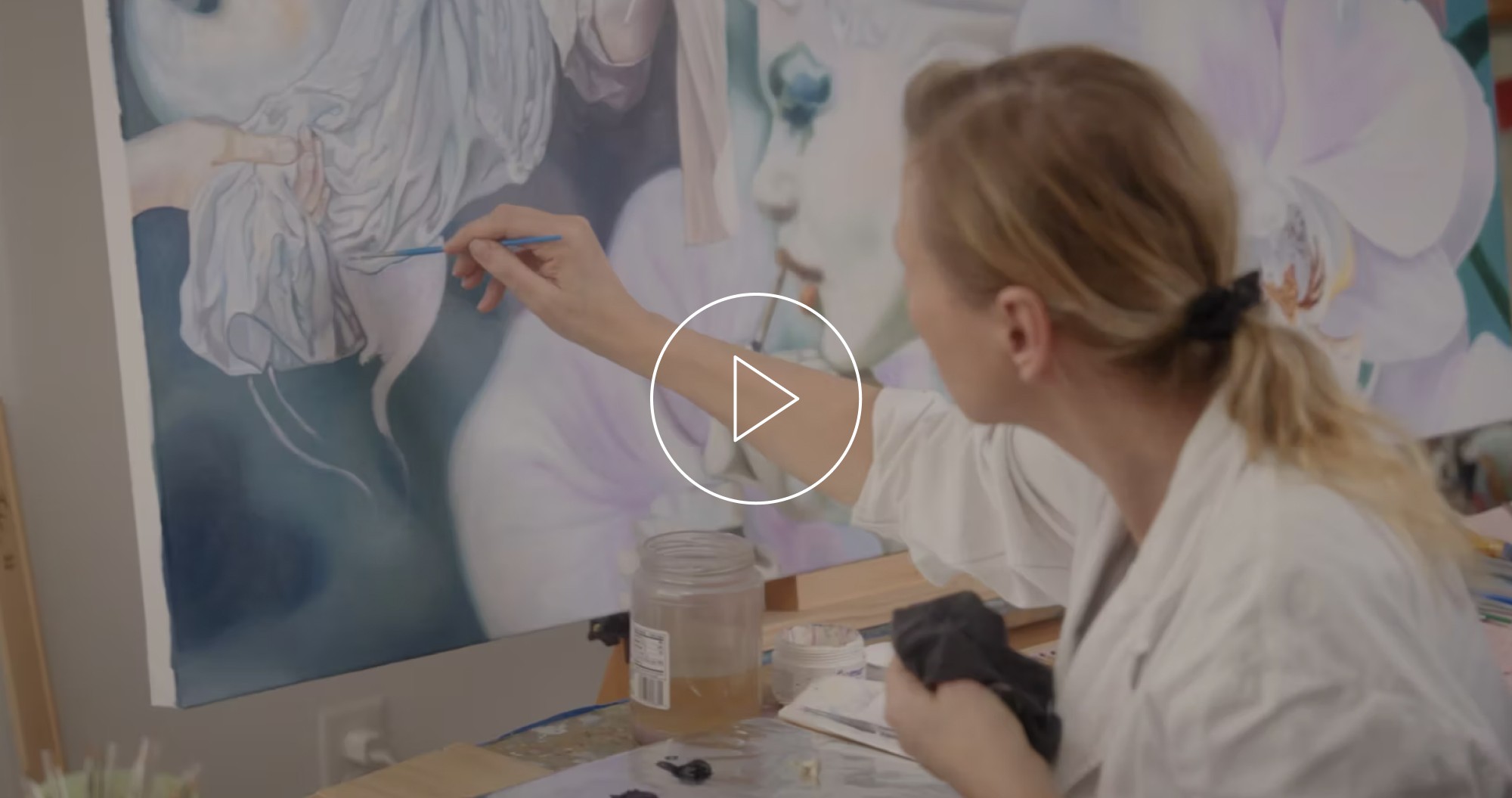
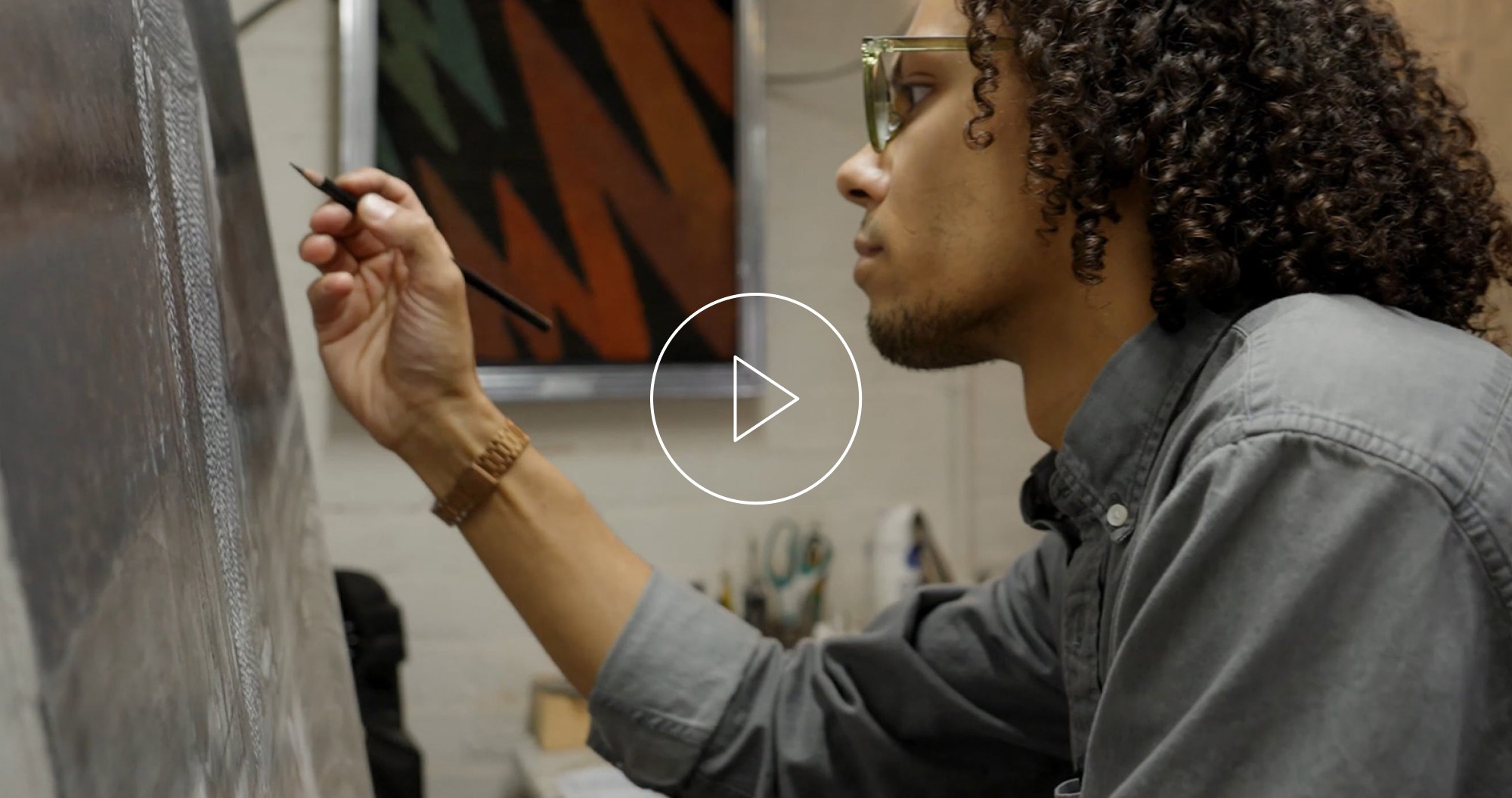
For me, the way I'm driven to paint is that I want people to interact with these objects in a way where they can see how I've done it, or they can't see completely how I've done it. They’re trying to figure out whether they could do it. I want people to feel like there's some things in there that are, mysterious, right?
I want people to interact with the work on every level. I want to be able to talk to anyone about what I'm doing and hear what they think about it; see if we can collaborate, because it feels like I'm trying to collaborate with everyone, really, who sees the work. It's a collaboration.
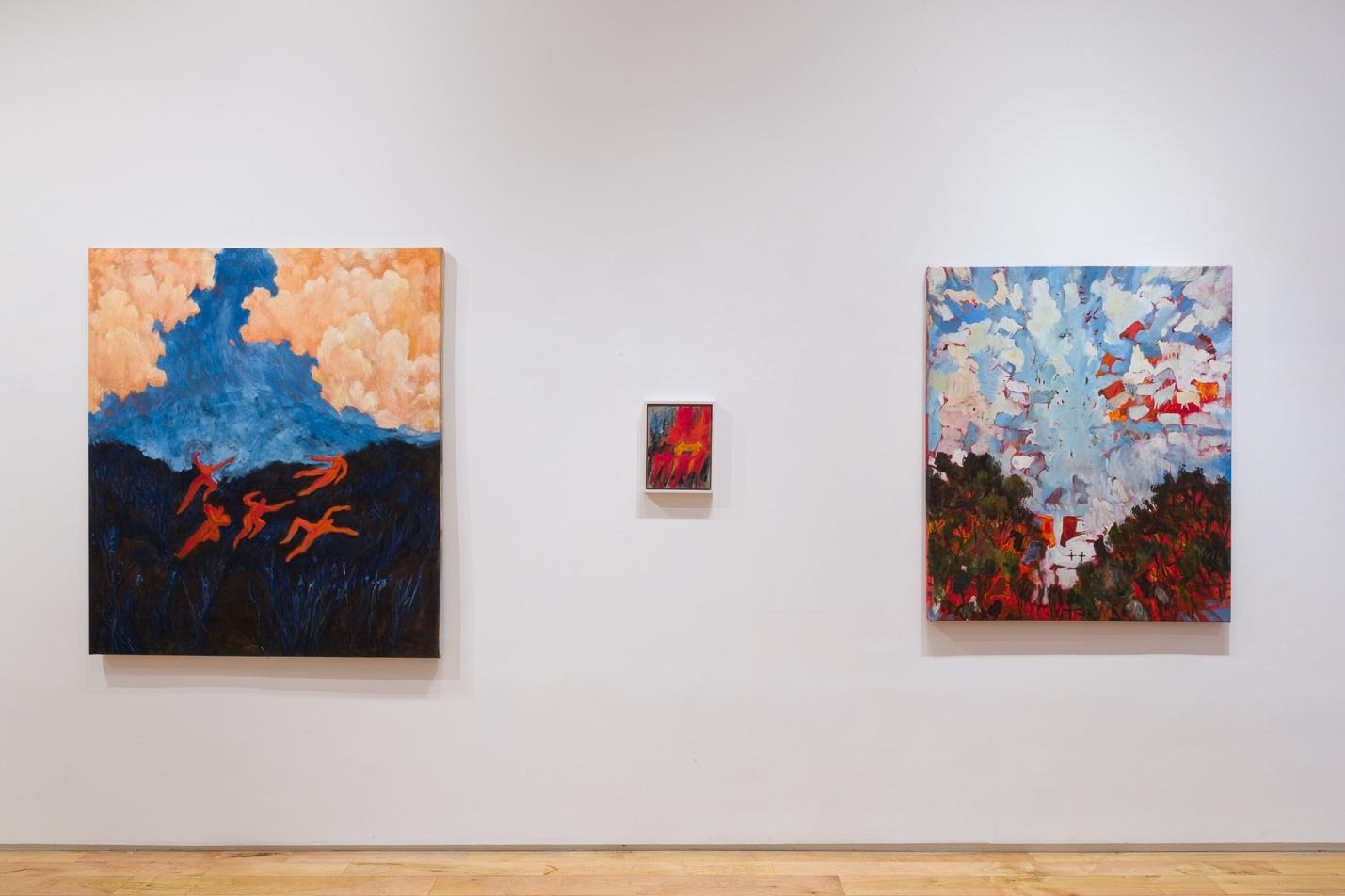
Yeh, that feels a very welcoming perspective on art… do you have any painting practises whilst you work that connect you to this? For example, do you listen to anything whilst you paint?
I listen to a lot of podcasts, I don't read a lot, but I'm really fascinated with science.
Science plays into it?
Yeh, I’d say any topic I know a tiny bit about. I don't know a lot about one thing really, other than maybe painting, but then even that, I'm figuring it out. And then it's, how do you figure this out? And with what structure? You have to name your terms, right? It's just kind of chaos all the time. You've got to sort of say, okay, when I'm painting like this, it's a spiritual thing, and when I'm painting like this, it's a scientific thing. The guy I was working with in the gallery, he says I paint like a surgeon, I’m precise. You figure out what you're doing in these disciplines, because it's so undisciplined.
I listen to these science podcasts and get lost in that a bit. Thinking about quantum physics as that's one of the kind of leading philosophical avenues that you can go down now, if you're trying to figure out what it is we're doing here as Humans or living things.
There is also the way we interact with what's happening in the scientific world is through these sensational stories where it's kind of spooky action at a distance. All of those things have been translated into a sort of sensational, poetic language. I didn't read the papers, right? Like somebody has read the paper and then told me about it, then I'm sitting there painting. Those ideas start in these strong disciplines, very empirical, having used the scientific method; It trickles down into how we shop and what you buy at the supermarket. All of those things impact us in all these ways that you don't necessarily see. I sort of think a lot about how we have a collective consciousness, or how culture is the collective consciousness.
Yeh that’s interesting; how the podcast form is a digestion of that information. I suppose painting too is a kind of digestion in a different form.
Yeh, like for example, do you know about the collapse of the wave function? I always talk about this, because it feels like that's how I speak and it's electrons. You can see them, but you can see how fast they're moving, or you can see them as a fixed point, but you can't like, tell how fast the point is moving, right? Basically, there's these two different ways of reading the information. If you do one, you can't do the other one. So I think, the electrons behave like a cloud and like a fixed point. And that's kind of how my answers come out.
Yeah, haha… it all comes out eventually…
Yeh, yeh…
When the exhibition came into its original construct, was there an experience you had that formulated it – a kind of origin point?
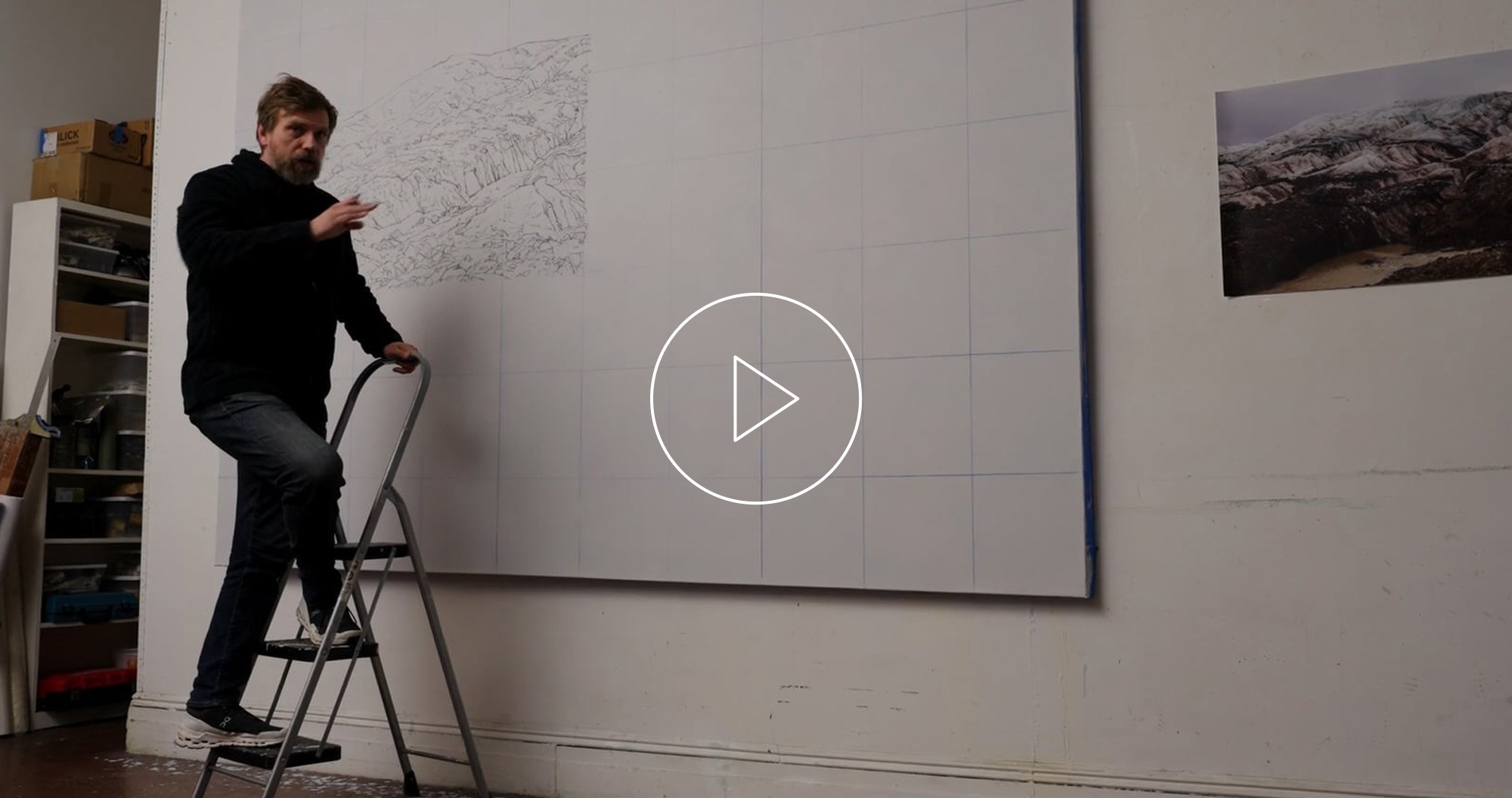
It feels like there's a lot of landscape in my work. Because I don't see the landscape so much so it’s kind of like I'm craving it, and my body makes it for me so I can see it.
That’s so interesting…
Yeh, like going to New York, you couldn't see any bedrock. You couldn't see any plants or animals, and all that stuff's really comforting to me. I can't express myself if I don't get in contact with the actual earth.
Like, coming back from New York, which is really clever and incredible in its own way, but not what I'm used to. I stopped over at my parents, where I grew up, and went for a walk in the woods there. I’m so privileged to be able to have had that and that really affected me... I really crave this kind of open wilderness, no people thing. That's when I can feel reset in a way… going up to Scotland last year and doing a residency there, that was really good.
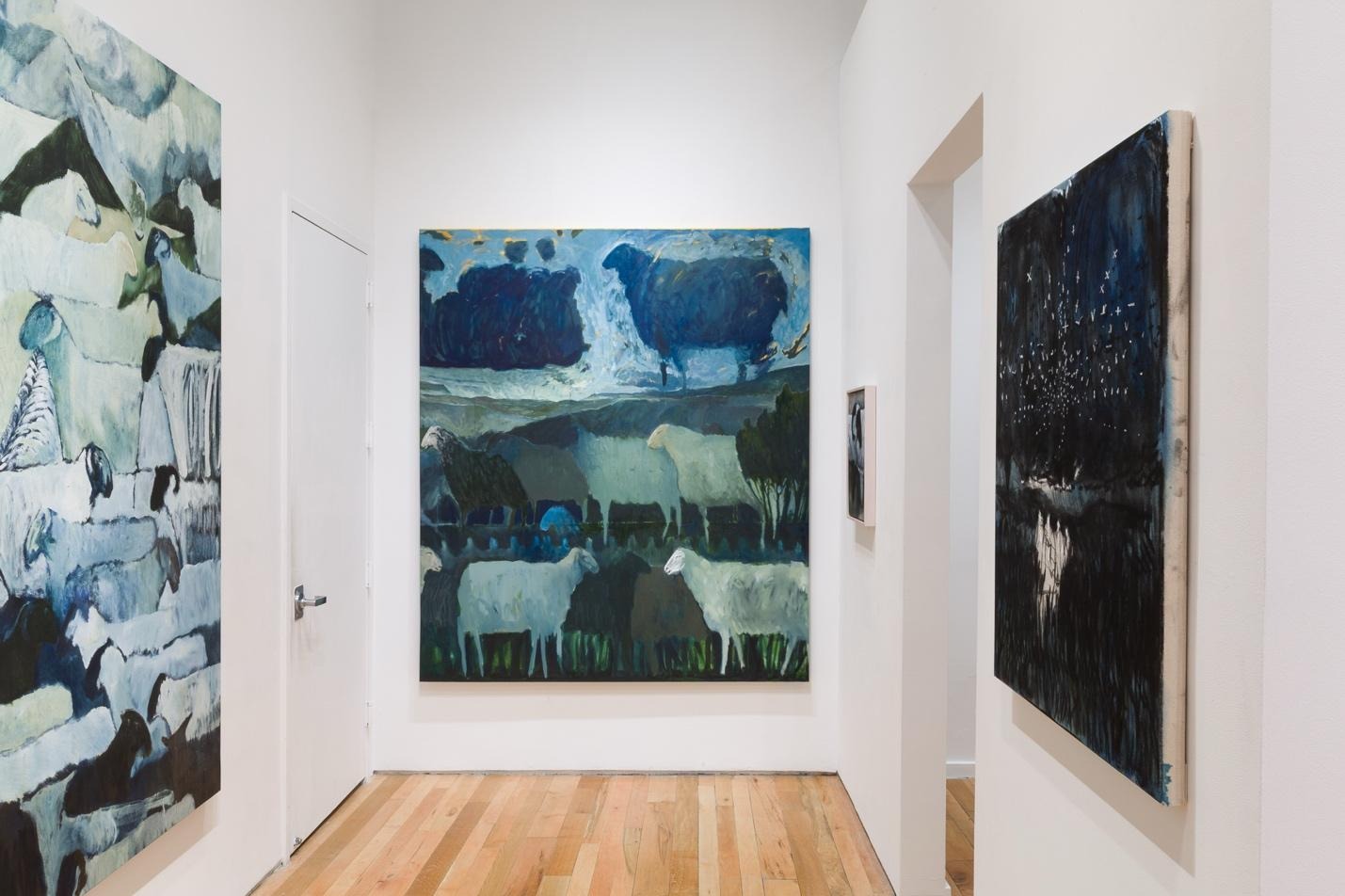
Yeh, there is a real connection in your paintings; The Landscape Of My Belly combines landscape with figures, both human and animals. Where do these figures come from?
It's in every person I see: like anyone, me and you, we could do it. We can do everything, like that’s how culture is built… I've grown up with a lot of people around me all the time. In England, there's always people around you. I think about mammals, it looks like it was made perfectly to be in the place it is in. It’s intelligent design. You know, you go to a city, and everything is built perfectly, but it's built by people, whereas these things were built by nature, right?
When people talk about a concept of design or whatever, and you look at a logo, and it makes sense, and that different one doesn't make sense. I think that's because of the same thing. We're hardwired to appreciate it.
They kind of contain information in a way that you're hardwired to read. If you see a predator, you know that that thing looks like that because it's a predator. Those feelings exist in us somehow in gestures and in landscapes. All of those things are hard wired into us; give us certain sort of endorphin releases. It does something when there's an instinct that kicks in and it makes you feel a certain way.
What drew you to the sheep originally as an animal of study? Can you tell us a little about their political/historical heritage?
I got so drawn to them is that they're not purely shaped by the forces of nature, people got involved. Sheep have this image of looking sweet and cuddly but they came from creatures that were able to defend themselves. Then they were domesticized into this product that, you know, you can get wool, which is clothes, you can get meat to survive, and it can turn wild forest into pasture. These are tools of colonialism and tools of survival, they unknowingly participated in the human expansion across England.
I think about this kind of England thing. I was raised in England as this sort of poetic idea but you see it’s full of difficulties and nuances. The sheep have lived through all of that. They hold that in them. The sheep kind of hold the land in stasis, right? They keep it from getting too wild, but they're also kind of necessary for it to be wild enough, so it's not a built environment. The landscape shapes the animal, and the animal shapes the landscape back. It's not concrete.
In a way, they're kind of superfluous now. I mean it's not like everyone's going to KFC and eating lamb. They transformed what was basically like a very wild forest into this thing you could build bigger and bigger structures for people, now we don't need them. It's not like you need to maintain the sheep to keep London happening. It's going to happen anyway.
That’s true… [laughs] In terms of wool, now we have synthetic materials and stuff like that as well now. How did you navigate the image of the sheep across the different colour contrasts and tones of Clouds of Limitless and Expanding Joy?
Generally, I’m painting intuitively and enjoying the process of painting. It’s interesting to me, you can cut a piece of paper up with black lines and it feels there's something so satisfying about composition there. Putting white on top again and taking off the black and sort of bringing it back again with these layers. You end up with something that shatters the order of looking at it as you're trying to deconstruct what line came first.
I think a lot of the paintings, they're kind of diagrams for thinking. If you're feeling a certain way and you're painting that comes through. If you're feeling good, you're going to make these big, confident moves, and they're going to take risks. If you're feeling shy, you make these paintings that are a bit tied up and curly. Whatever it is, you can see that as a person who paints, I can see in the paintings where I was second guessing myself.
You can pick the colour based on how they are, representing the moods, but then also how all of this stuff eventually makes form: it's going to look like a landscape. You've got instinctive colour which people are drawn to, and then you've got these forms which people are drawn to, and you can talk to many people at once. I'm drawn to the forms or the figures because it's another tool for directing the attention.
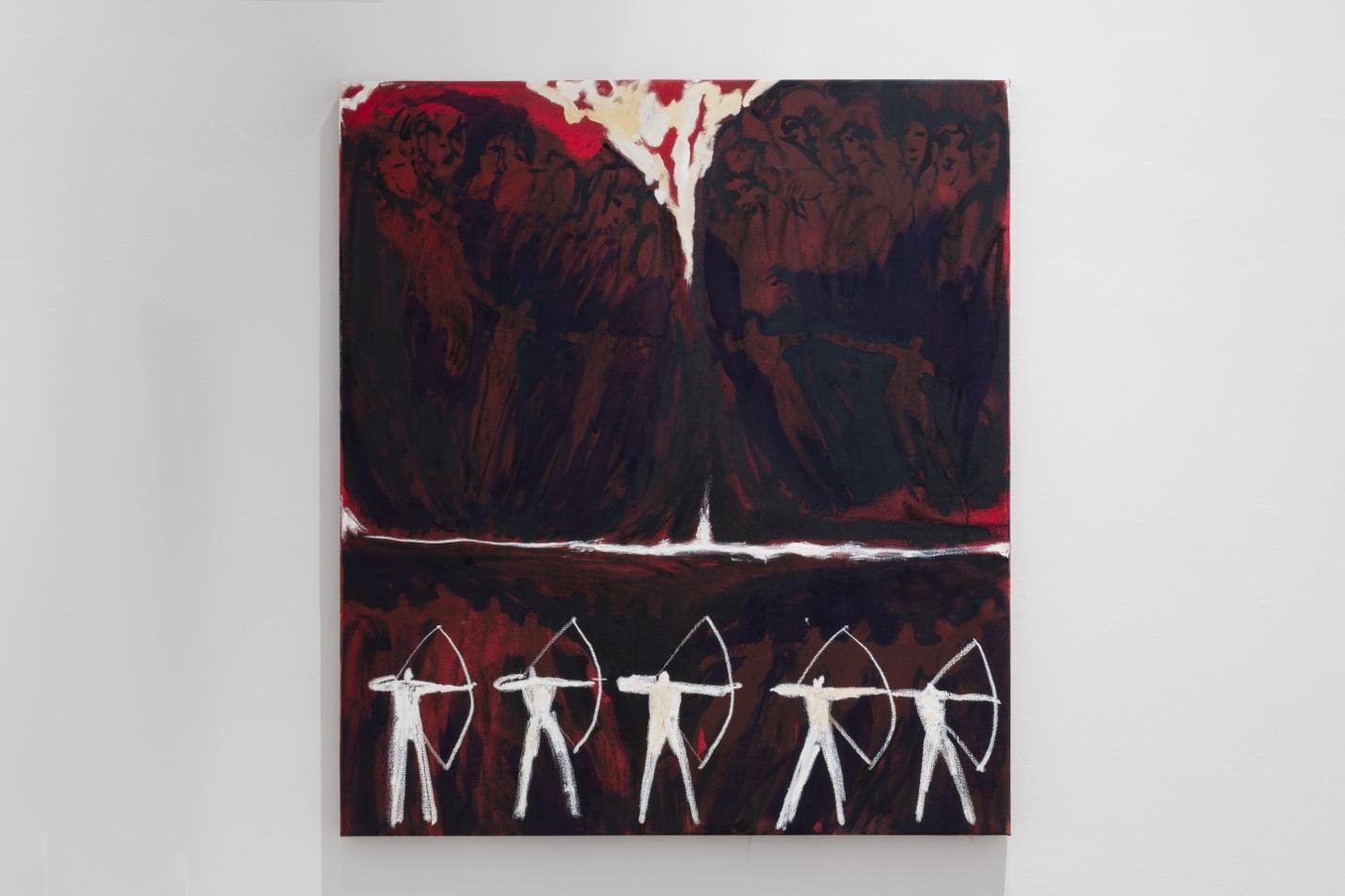
I suppose the digestion of time kind of mirrors the layering of the paint in a way. This history that we’re connected to. There is this idea of deep time and ancestry in your paintings. For people looking to get in touch with this part of themselves, where would you recommend them to start?
I mean I’ve had access to these places and I didn't really realize, you know, how lucky I was to have that kind of woodland near to my parent’s house.
The National Trust has got a load of stuff that you can go to and I think the most important thing is that you're going as an observer. You’re going as someone who is there to be in tune with that and not to be dominant. You’re bringing your brain into the forest and you can’t do anything about that because it’s been put into you but you can recognise it. If we want these spaces to remain, people have got to understand that you have to participate in them in a respectful way. This stuff is sort of about reconnecting…
It's important to not just say that everyone in the past were these divine beings that understood and were at one with nature and were better than us now. It doesn't work like that. When I'm thinking about archaeology and history and all of those things, no archaeologist knows for sure what these people were thinking or how they saw the world or how it worked, but you can, by observing any natural system, start to feel more in line with how that object acts.
When you're looking at plants, they go to the light and you can see that, you can figure it out and you can back engineer that. This is the magic of the natural world that you don't have in the human world. The answers in the human world are folded in on what that person was thinking, it’s conscious, whereas water flows downhill. You can start with those things. I think if you want to get more involved, it is in the… anticipation, I suppose, in the natural world because that's what it is. It's not, it's not about going there and buying something. It's not like a thing that you can consume, right?
Yeh there is definitely this interest in human and non-human lives in conjunction within these works.
I think it comes from when I was younger. It comes from again, having this Romantic idea of a landscape that you existed in. When we were kids and we went to the Lake District and stuff, there was this kind of romantic idea connected to that. This is where ancient knights walked around and wore shiny costumes and did things: the Right thing to do. There was this kind of spiritual…point? They were like heroes, I guess, like superheroes…
I'm really led by the kind of confidence of that stuff. When you're a child and you're playing and you’re kind of innocent and you have no experience. I feel like, culturally, post covid, there's like this loss of innocence. It's like the city that never sleeps had to stop and had to sleep and so this endless growth thing really sort of seemed finished.
I don't know whether people are still like we can still just grow infinitely with all the resources, or not. It definitely felt like a reality check for culture and like how the West operates. After that, this symbol of the righteous knight has been recurring for me, because they kind of have the judgment in them, right? They have this day of reckoning… In this Alan Garner book, there's all these sleeping knights in the hill, and one day when this Battle will come, all the knights come out of the hill and save the world. When England is in direct peril… yeah.
I suppose in a way that is a part of the importance in our reconnection to the land… in the idea of honour and righteousness…
Yeah, when it goes back to that kind of heroism and testing it against nature. You can't beat up a volcano, right? It's not the point of hand to hand combat with a volcano. The volcano would win. It doesn't matter how much money you've got. You're not going to win. I feel humbled by something in all of this…
I remember when I was a kid feeling like that's what you are when you can paint, when you can make something for yourself out of nothing; that's a miracle. It feels like you can extend outside of your body. And I really feel like that. All of the figurative stuff, and even the impulsive stuff, they're all sort of points in a massive map of feelings. It's like we're living in this kind of endless sensation of feelings, one after the other.
This awe of the earth’s power is very dense within your paintings. You’ve mentioned this idea of knighthood, what do you think about your pieces in relation to judgement?
There's an attitude that the paintings are judged, part of the art world or whatever… It's playing with that idea that instinctual judgment and how people judge.
There's also a judgment in a kind of daily judgment from a judging culture. I'd say, seeing people on the street, kind of my initial reaction to seeing a person is like, what an incredible thing has happened, Human Beings can walk the earth. [laughs] But there's also how that person could have a different opinion and you could never talk to them again. There's a turmoil there. Where you feel incredibly connected to other humans but then also charged up against each other, and there's like this kind of friction growing in culture that is a driving force of the sort of model of consumer capitalism.
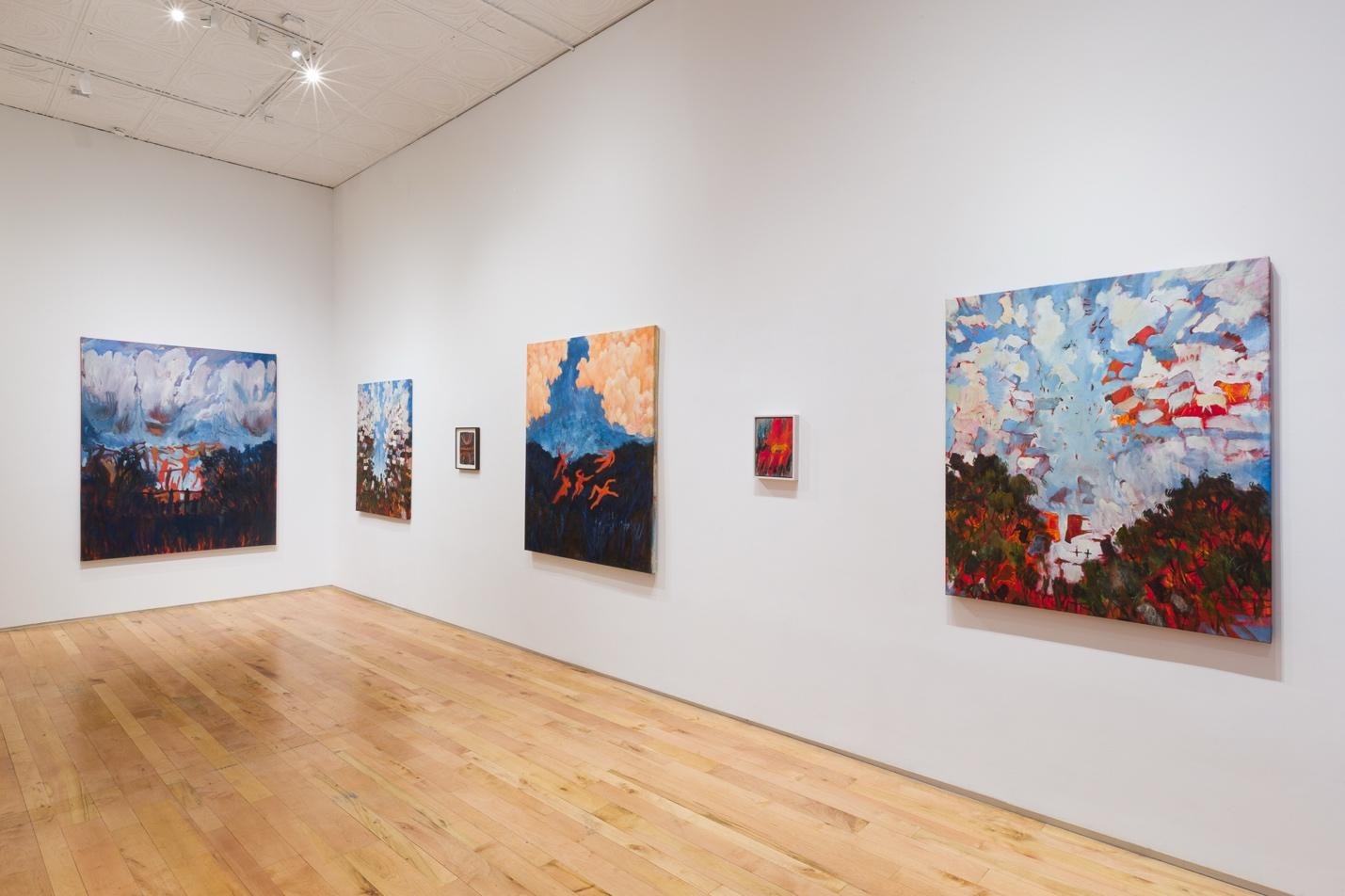
Yeh, there is definitely this idea of urgency in your paintings with the sharp colour palette…
The red kind of acts as like a bedrock. It’s iron red, blood red, also like lava red, it's the celestial body red, the red that's in the Planet. You have a human; some people have more of that kind of wild, deep life force than other people, then the blue becomes kind of the opposite of that. It becomes this idea of the spirit.
The red of the body has its own consciousness and the mind has a separate consciousness from that which is really interesting to me. How our body has these ways of helping you and kind of holding you back from games and all of that, because it's got its own brain. Your brain is a much smaller percentage of your actual biomass, and that's something that kind of drives more of these decisions. I think the blue painting is kind of speaking about that. They end up being darker, they end up having this kind of nighttime feeling to them, this sort of dusk. I'm more calm when I go to sleep, and I interact with that part of myself in a more loving, more tender way when I'm calm. The big blood red energy body stuff is much more confident. It drives a lot more…
Yeh, for sure. I suppose your paintings are a way to connect to this sense of feeling and where it shows up in the real world. Nature becomes a part of us and it’s beautiful the way you expand that onto the canvas. There is this thread that works through the exploration of this exhibition…
Yeh, I get stuck on these symbols, like the symbol of a knight or the symbol of a sheep. You can put that on the table, and then you can take all of these things to connect to this. You know, everything that revolves around this symbol and creates this big cloud of sort of discussion around the work.
You get these juxtapositions. I wrote a book called The Telepathic Field, which was where I used the metaphor of a field. You're taught to sort of grow one thing in your life and choose that thing early on and just kind of stick to it and monoculture it, and every year harvest it, until eventually the land goes arid and you can’t produce it anymore.
The idea being you don't grow one thing and you see what comes into your field. You know, there's crossover from the fields next to you in the woodland, the animals bring in more inspiration and things can grow naturally in your landscape. You can rewild yourself in that sense. You shouldn't just do one thing, because that, again, is bad for your spiritual kind of growth. I think a lot of people have talked about that in the last few years, this idea of rewilding.
How can this show up for us today?
Early on, I remember in school, at least once or twice going to the woods and I think that still happens but it feels to me really important. You’re teaching kids coding. You should teach kids what it feels like to be outside with something. You just have to take them through and they'll do the rest.
I suppose that comes back to art – this sense of exploration is so important and powerful when it’s given access to.
Yeh, it does feel a lot like art, at the moment, has kind of lost these kind of big gravitational anchors. It used to be that things were all sort of stuck down, immovable to these, like institutions or concepts and ideas. In the last few years, it's felt like a real whirlwind swept through all of that and shaken everything up. Things have felt really unseated, what the art world is doing. And that's really interesting but also quite turbulent. Big galleries are shutting down, artists who are sort of outside of the oligarchy or whatever, becoming huge, and people who were, like, huge for ages are suddenly like not being so well regarded. The market and all of those different things being quite sort of shaken up has meant that it's really interesting as an artist making art now to sort of wonder, where those big anchors are and what's holding all this down.
For sure, I think Instagram has had a big role to play…
Yeh I've had to stop trying to say everything all the time, and try and focus in more on one or two things. But I find it really difficult. I feel like I've got so much to interact with and express.
I can imagine… I think your work spans that wide reaching interest you have. Thank you for your time today, Hugo, it’s been lovely being connected. Such an interesting conversation.
You too, thank you for having me!